MAINTENANCE & ASSET MANAGEMENT SYSTEMS (CMMS/EAM)
A Computerized Maintenance Management System (CMMS) organizes maintenance work: work orders, preventive schedules, spare parts and labor. An Enterprise Asset Management (EAM) system extends that control across the entire asset life cycle: acquisition, operation, maintenance, cost, risk and renewal. Well selected and implemented, these systems turn maintenance from a cost center into a source of reliability and value.
How we help:
- Selecting a CMMS/EAM: defining requirements, comparing options objectively and building the business case, so the system fits your operation, budget and IT landscape.
- Asset management: building the asset registry and hierarchy, criticality analysis and life-cycle costing.
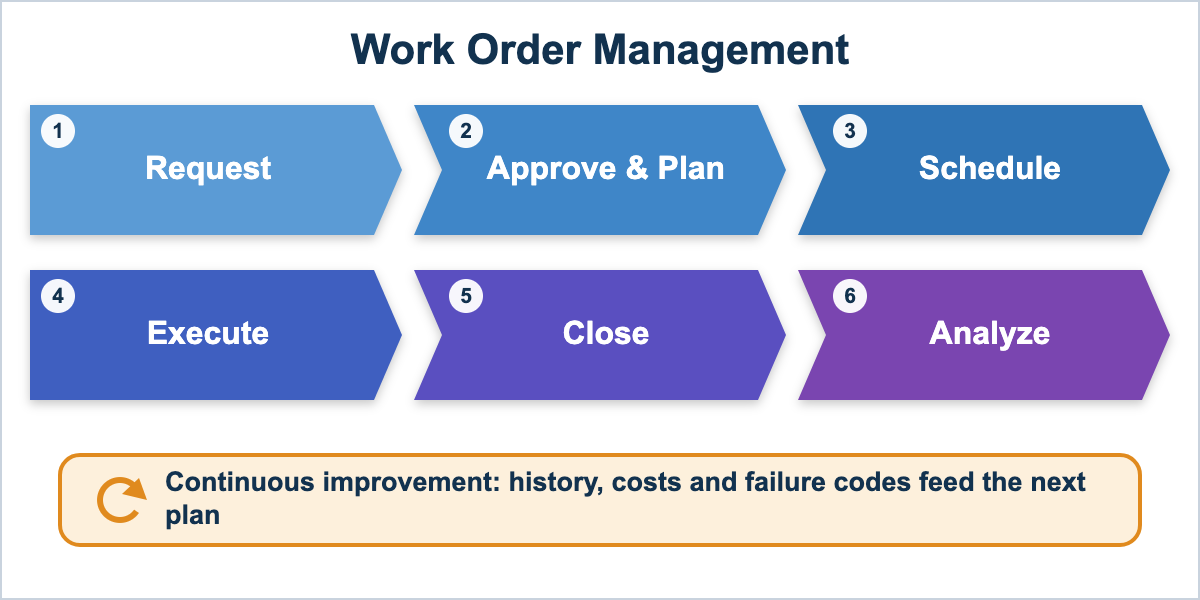
- Work order management: requests, approval, planning, scheduling, execution and closing, with backlog and spare parts control.
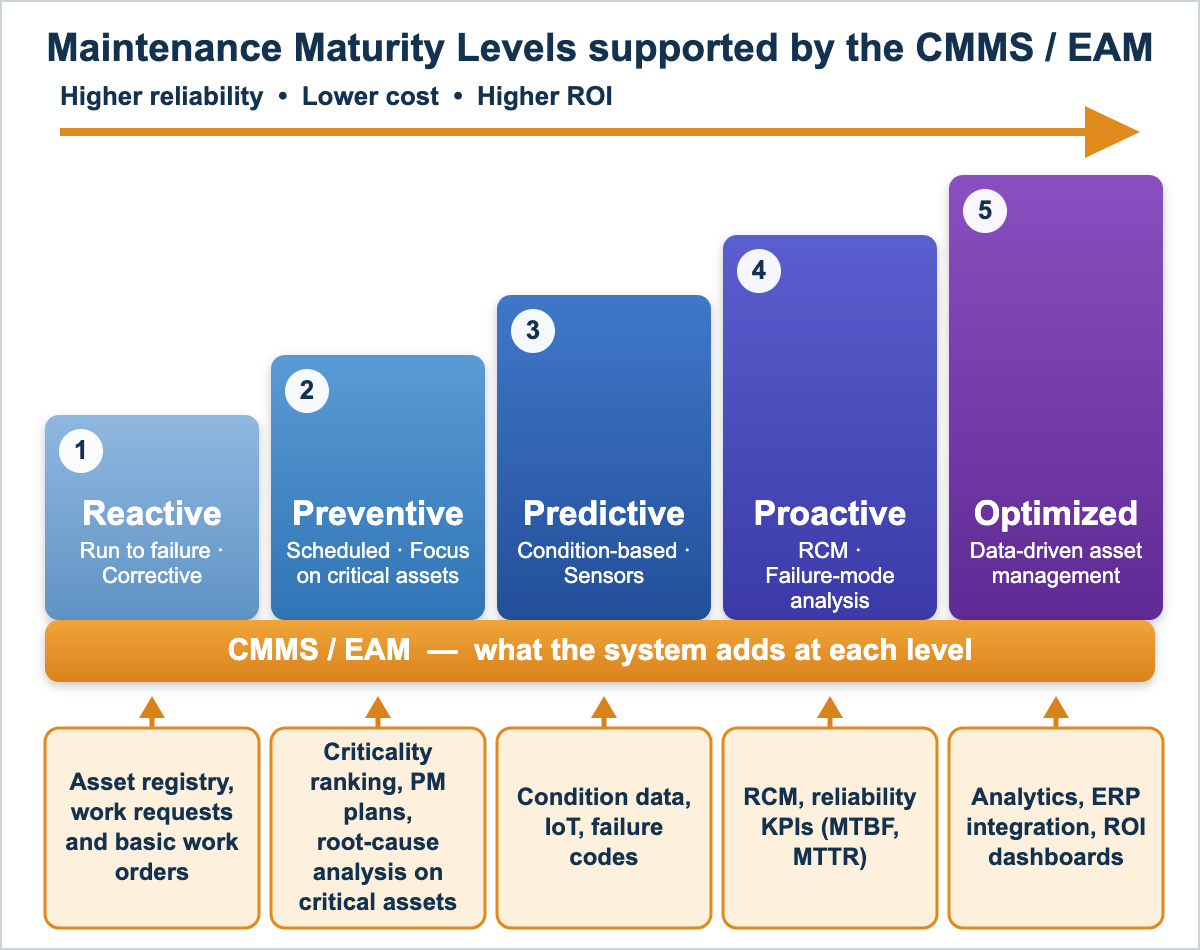
- Maintenance strategies: corrective, preventive and predictive maintenance, and Reliability-Centered Maintenance (RCM) to define the right strategy for each asset.
- Maintenance maturity level: assessing where you are today and defining a roadmap from reactive to proactive maintenance.
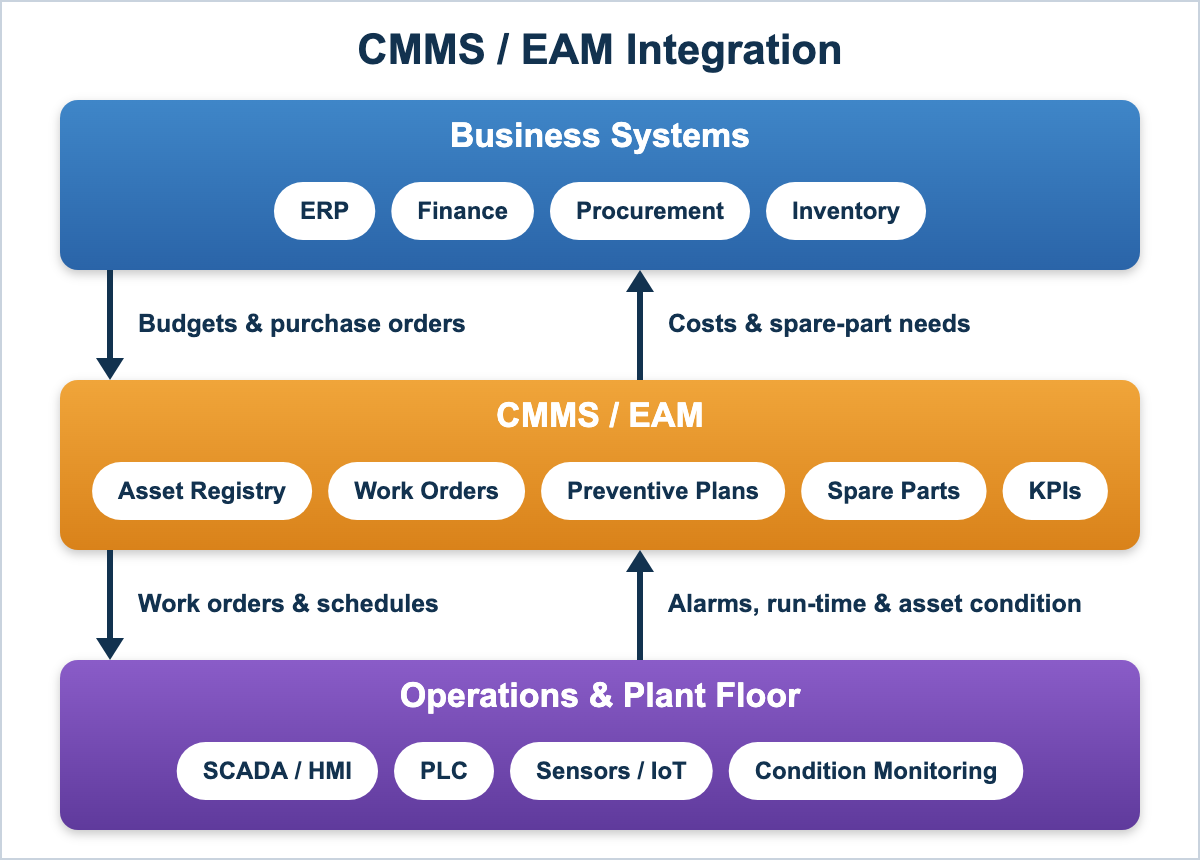
- Integration and KPIs: connecting the system with ERP, SCADA/MES and IoT condition monitoring, and tracking MTBF, MTTR, availability and OEE.
Principles for a successful implementation:
- Start with clear objectives: fewer failures, faster response through planned work, and higher customer satisfaction.
- Standardize: a common asset naming and coding scheme, one work order workflow, a shared spare parts catalog, task groups and preventive plans across all sites, supported by the system.
- Synchronize: run preventive maintenance on common cycles so every site follows the same routine and results can be compared.
- Share knowledge: build a team culture of respect, trust and learning from each other, with a regular KPI review based on system data.
- Choose a system that works for the technician: configurable, simple enough to learn in days, and flexible to the team’s workflow.
- Implement in short cycles: deliver value every few weeks, learn from mistakes early and improve after each release.
- Measure and mature: track MTBF, MTTR, reliability, availability, planned versus reactive work and preventive completion; use runtime data to fine-tune preventive frequencies and move toward predictive maintenance.
Return on investment (ROI) levers:
- Less unplanned downtime and fewer production or service losses.
- Lower maintenance costs: less emergency work and overtime.
- Higher labor productivity through better planning and scheduling.
- Optimized spare parts inventory and purchasing.
- Longer asset life and better-timed capital replacement.
- Improved safety and regulatory compliance.
- Better decisions supported by reliable maintenance data.
We have applied these practices in oil, retail and manufacturing operations.